
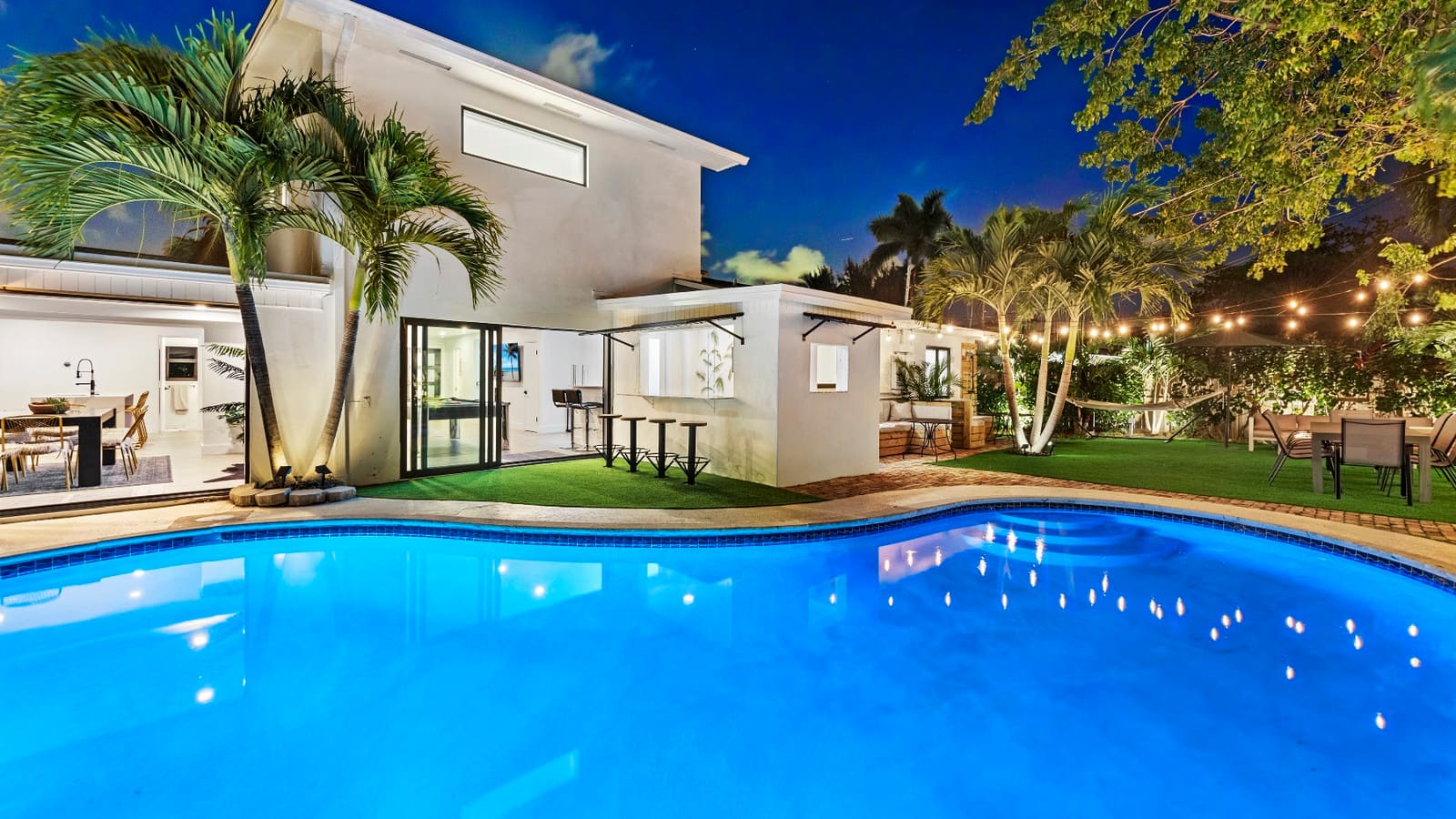
Compare the shared living spaces before choosing a Miami villa
Use an ordinary hour of your trip to compare villa living rooms, dining spaces and quiet corners, then turn unclear photos into specific questions.
A villa can have the sleeping arrangement your group needs while leaving a different question unanswered. Where will everyone spend the hours between outings? Before choosing a home, picture an ordinary hour of the stay and compare the spaces that would need to work at the same time.
Start with a few homes from the Luxx Miami villa collection. Keep each listing open as you write down your group's plans. Bedrooms deserve their own check, but the shared rooms determine whether a meal, a quiet conversation and someone else's downtime can happen without everyone rearranging the day.
Pick an ordinary hour, not the highlight of the trip
Choose a moment when most of your group expects to be at home. It might be breakfast before people leave separately, a break between afternoon plans and dinner, or an evening when nobody wants another outing. Describe what people would actually be doing.
For example, some guests might want to sit around a table while another person needs a quiet place for a call. A large open room could make conversation easy but leave the call unresolved. This is a planning example, not a description of any particular villa. Use your own group's habits to decide which questions matter.
Ask which activities can move to a different time. If everyone can take turns using one table, you may not need separate spaces. Keep fixed requirements visible while comparing homes.
Separate furniture from usable arrangements
A gallery can show a dining table without showing every chair or the space around it. A lounge photograph can show several seats without explaining whether everyone can comfortably sit together. Count what you can identify, then mark the rest as a question.
Ask about the current furniture arrangement for your stay. If eating together matters, describe that plan and ask whether the dining setup supports it. Avoid assuming that stools, outdoor chairs or chairs in another room can be moved to create the arrangement you want.
For a games evening or laptop session, name the activity and the surface it needs. A low coffee table may suit one plan and not another.
Read the connections between rooms
Look for the route between the kitchen, dining area and living room. Then look for what the pictures do not establish. Is a second sitting area a separate room, an alcove beside the main room or another view of the same sofa? Can a door close between the spaces you want to use separately?
Keep the relevant photo numbers or screenshots with each question. Describe a visible feature so the contact can identify the image even if the gallery order changes. A question such as "Does the sitting area shown beside the staircase close off from the main living room?" is easier to answer than "Is there enough privacy?"
A closed door in a photograph does not establish sound isolation. If quiet matters, ask what the team can confirm. Keep another time or arrangement in mind where the answer is uncertain.
Check the plan with outdoor space removed
If the group expects to spend much of its time outside, do one extra comparison using only the indoor rooms. This is useful whenever people choose to come indoors, regardless of the reason. It exposes a plan that depends on every outdoor seat being usable all the time.
Ask which outdoor spaces and furnishings are available to your group for the stay, and what instructions apply. Keep any proposed visitors or gathering separate from your overnight group's everyday use. Photographs of a terrace do not establish permission for a different use of the property.
Decide whether the group would accept separate meal sittings or moving an activity to another day if the indoor arrangement needs it.
Make one comparison note per home
Use the same questions for each candidate so a striking photograph does not replace a practical answer. A short note can contain:
- The listing link and the ordinary hour you are planning around.
- Activities expected to happen at the same time.
- The room or furniture arrangement proposed for each activity.
- Details visible in the gallery and details still unconfirmed.
- The question that would rule this home in or out.
- A fallback the group would accept.
Keep sleeping arrangements in your separate room-allocation checklist. That prevents a confirmed bedroom count from being used as the answer to an unrelated dining or living-room question.
Send the question that changes the decision
Lead with the requirement that determines whether the home belongs on your shortlist. Include your dates, group plans and the exact property link.
We are comparing this home for our stay. During the same part of the day, our group expects to use the shared spaces as described below. Please confirm which rooms and current furniture arrangements support those activities. We have attached the gallery images we are unsure about. The detail that matters most to our decision is listed first.
Add the answer to your note and label anything still unresolved. Compare the confirmed arrangement with the fallback your group would accept.
FAQ
Does a large villa necessarily have separate living areas?
Check the layout of the exact home. A size description or bedroom count does not tell you how the shared rooms connect or whether they can be used separately.
Should we ask for more photographs?
Ask for the specific view that would answer your question, such as the connection between two rooms or the current dining setup. Explain what you need to understand; more photographs of the same angle may not resolve it.